

How do repeaters extend two-way radio range?
March 26, 2026
How Repeaters Boost Two-Way Radio Range?
Repeaters extend two-way radio range by receiving weak incoming signals and instantly retransmitting them at higher power from elevated locations, expanding coverage from a few miles to hundreds of miles.
What Is a Radio Repeater?
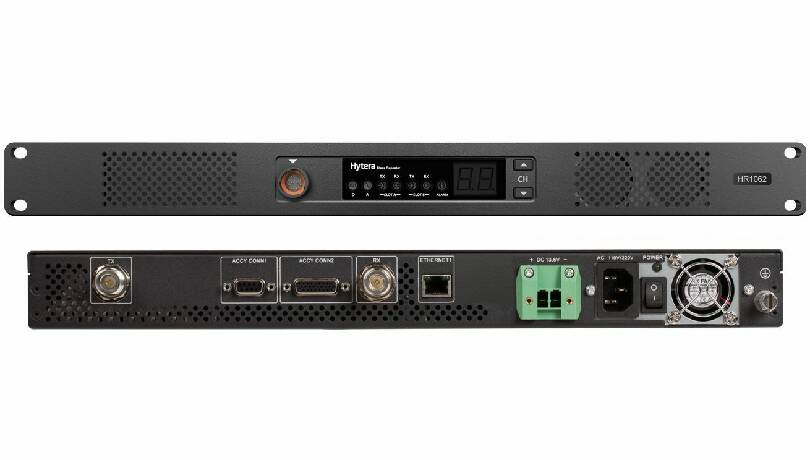
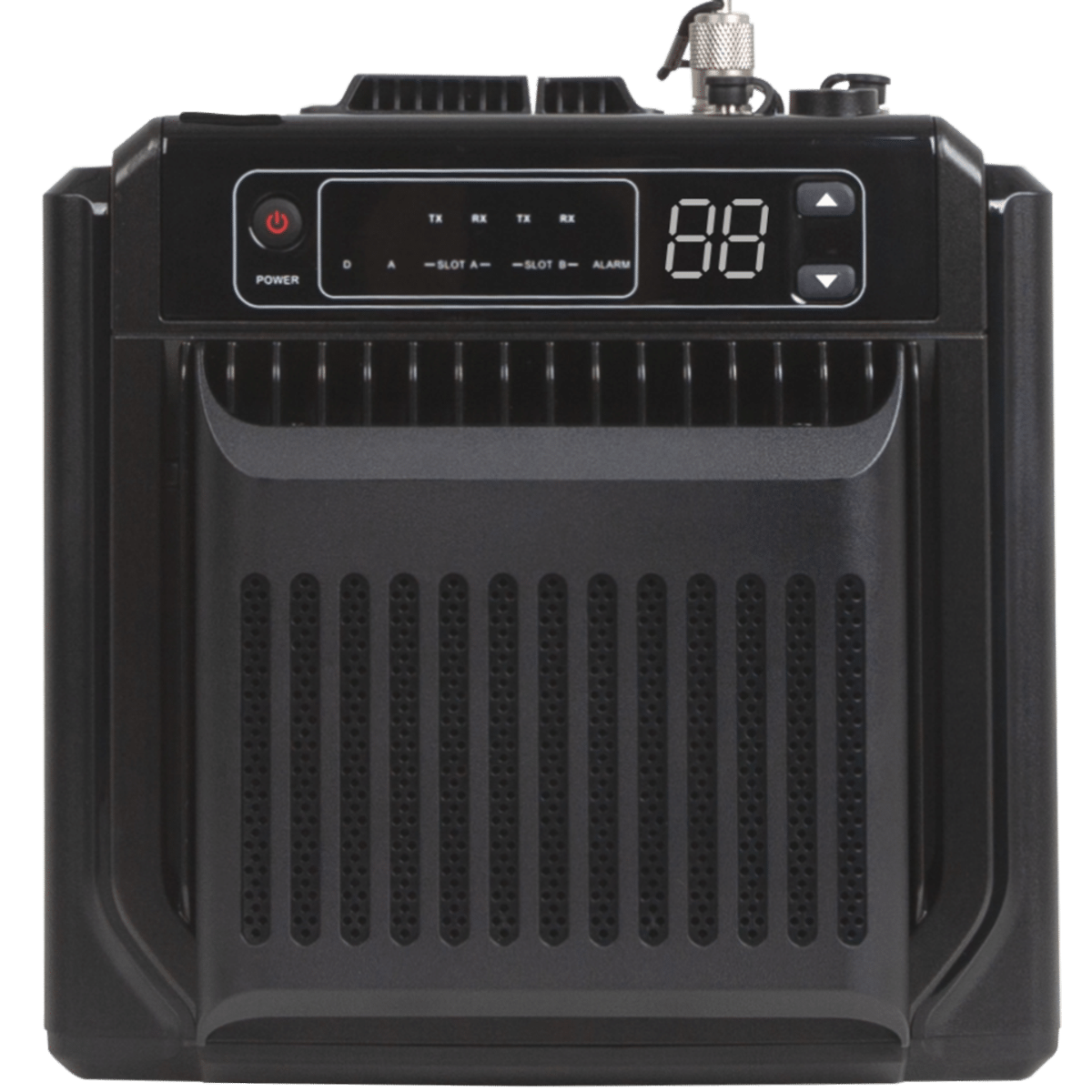
A radio repeater is a device that listens for a transmission on one frequency and simultaneously rebroadcasts it on a different frequency at much higher power. Mounted on hilltops, towers, or tall buildings, repeaters overcome the biggest limitation of two-way radios: line-of-sight range.
How Repeaters Work?
Your radio transmits a low-power signal on the repeater's input frequency.
The repeater receives that weak signal, even from miles away.
The repeater instantly retransmits the signal on its output frequency at full power.
Every radio in range of the repeater hears the retransmitted signal clearly.
This process happens in milliseconds, making communication feel seamless.
Why Elevation Matters?
Repeaters are placed at high elevations for one critical reason: radio waves travel in straight lines. The higher the antenna, the farther the radio horizon extends. A repeater mounted at 3,000 feet can cover terrain that would block ground-level radios entirely.
Repeater Height - Approximate Coverage Radius
100 ft tower
12 to 15 miles
1,000 ft hilltop
40 to 50 miles
3,000 ft mountain
80 to 120 miles
Input vs. Output Frequency?
Repeaters use two separate frequencies, called a duplex pair, to transmit and receive at the same time without interference:
Input frequency: what your radio transmits to the repeater.
Output frequency: what the repeater transmits back to all users.
Offset: the fixed difference between the two (commonly 600 kHz for VHF, 5 MHz for UHF). Your radio must be programmed with the correct offset to access a repeater.
How Far Can a Repeater Extend Range?
A typical handheld radio has a real-world range of 1 to 3 miles.
The same radio through a well-positioned repeater can reach 50 to 150 or more miles.
Linked repeater networks can extend coverage statewide or nationally.
Types of Repeaters?
Analog Repeaters: Traditional FM repeaters, widely available and simple to use. Compatible with most two-way radios.
Digital Repeaters: Use protocols like DMR, P25, or D-STAR. Offer clearer audio, encryption, and internet linking for global communication.
Linked Repeater Systems: Multiple repeaters connected via internet or RF links, covering entire regions or countries.
CTCSS and Access Tones?
Most repeaters require a CTCSS tone (also called a PL tone) to open the repeater and prevent interference from other users. Your radio must transmit the correct tone, typically between 67 and 254.1 Hz, or the repeater will ignore your signal.
FAQs - Most Common Questions - Repeaters
1. What is a two way radio repeater?
A two way radio repeater is a device that receives a radio signal on one frequency and retransmits it simultaneously on another frequency at higher power. This extends the communication range far beyond what handheld or mobile radios can achieve on their own, often covering entire cities, mountain ranges, or counties from a single installation.
2. How does a repeater extend radio range?
Repeaters are typically installed at high elevations — on towers, hilltops, or tall buildings — giving them a clear line of sight over a wide area. When a portable radio transmits, the repeater picks up the weak signal and rebroadcasts it at much higher power across its full coverage footprint, allowing radios many miles apart to communicate reliably.
3. What is the difference between simplex and repeater operation?
Simplex operation means both radios transmit and receive on the same frequency directly to each other, which limits range to a few miles. Repeater (duplex) operation uses separate transmit and receive frequencies called an offset, routing all traffic through the repeater and dramatically extending range.
4. What frequencies do repeaters operate on?
Repeaters are found across several frequency bands. VHF repeaters commonly operate in the 144–148 MHz range, UHF repeaters in the 420–470 MHz range, and there are also repeaters in the 220 MHz, 900 MHz, and microwave bands. Business and public safety systems often use dedicated UHF or 700/800 MHz band repeaters. The appropriate band depends on terrain, coverage needs, and the radio system in use.
5. What is a repeater offset or split?
A repeater offset is the difference in frequency between the repeater's input (the frequency it listens on) and its output (the frequency it transmits on). Standard offsets vary by band: VHF typically uses a 600 kHz offset, UHF typically uses a 5 MHz offset. Radios must be programmed with the correct offset so they transmit on the repeater's input while receiving on its output.
6. What is a CTCSS or PL tone on a repeater?
CTCSS (Continuous Tone-Coded Squelch System), often called a PL tone, is a sub-audible tone transmitted alongside the voice signal. Repeaters use PL tones to filter out interference from other signals on the same frequency. If your radio is not programmed with the correct PL tone, the repeater will not open and your transmission will not be relayed. Common PL tones are published in repeater directories.
7. What is a DCS code and how is it different from CTCSS?
DCS (Digital-Coded Squelch) serves the same gating function as CTCSS but uses a digital data stream instead of an analog tone. Some repeaters use DCS codes instead of or in addition to CTCSS. Both systems prevent the repeater from activating on unintended signals, and both must be programmed correctly into the user's radio.
8. How do I find local repeaters in my area?
The most widely used resource is the RepeaterBook database (repeaterbook.com), which lists thousands of amateur and some commercial repeaters worldwide with frequencies, offsets, PL tones, and coverage details. The ARRL Repeater Directory is another authoritative source. For business and public safety repeaters, licensing information can be found through FCC license databases. Many local amateur radio clubs also publish their own repeater information.
9. Do I need a license to use a repeater?
For amateur radio repeaters, yes — you must hold a valid FCC amateur radio license (at minimum a Technician class license in the US) to transmit through them. For business or commercial repeaters, use is restricted to licensed users within that organization's FCC-licensed system. Listening to repeater traffic is generally legal without a license, but transmitting is not.
10. What equipment do I need to access a repeater?
Any radio capable of operating in the repeater's frequency band and programmed with the correct frequency, offset, and PL tone can access a repeater. Handheld (HT), mobile, and base station radios all work. The radio must support duplex operation, meaning it can be set to transmit on a different frequency than it receives on. Most modern two way radios and amateur handheld radios support this.
11. How do I program a radio to use a repeater?
To program a radio for repeater use, you need four pieces of information: the repeater output frequency (what you receive on), the offset direction and amount (plus or minus the standard offset), the PL tone or DCS code if required, and the transmit power level appropriate for your distance from the repeater. Most radios allow manual programming through the keypad or via programming software connected to a computer.
12. What is a linked repeater system or repeater network?
A linked repeater system connects two or more repeaters together via radio links, internet (such as EchoLink or AllStar), or dedicated RF links. When one repeater receives a signal, it is simultaneously retransmitted through all linked repeaters. This allows users across a wide geographic area — sometimes spanning states or countries — to communicate as if on a single local repeater.
13. What is a DMR repeater?
DMR (Digital Mobile Radio) repeaters use digital voice encoding instead of analog FM. They offer cleaner audio at the edge of coverage, more efficient spectrum use, and advanced features like talkgroups and time slots that allow two independent conversations on one channel simultaneously. DMR repeaters are common in both amateur radio and commercial/business radio systems, and require a DMR-capable radio to access.
14. What is a P25 repeater?
P25 (APCO-25) is a digital radio standard widely used by public safety agencies including police, fire, and EMS. P25 repeaters provide interoperability between different agencies and manufacturers and support features like encryption, radio identification, and emergency alerts. P25 radios and systems are typically more expensive than commercial or amateur equipment and are primarily deployed in professional public safety environments.
16. What is a D-STAR repeater?
D-STAR (Digital Smart Technologies for Amateur Radio) is a digital voice and data protocol developed by Icom for the amateur radio market. D-STAR repeaters can relay voice, low-speed data, and even position information. They are typically linked over the internet using gateway systems, allowing worldwide communication. D-STAR radios must be registered with a gateway before use.
17. How far can a repeater reach?
Coverage range depends on the repeater's antenna height, transmit power, and the surrounding terrain. A well-sited VHF or UHF repeater on a mountain or tall tower can reliably cover 50 to 100 miles or more under favorable conditions. In flat terrain or urban environments with antenna on a building rooftop, 20 to 40 miles is typical. Terrain obstructions, trees, and buildings all reduce effective range.
18. What is a repeater controller?
A repeater controller is the electronic brain of a repeater system. It manages the logic that opens and closes the repeater's transmitter, enforces time-out timers to prevent single users from monopolizing the channel, generates courtesy tones and ID announcements, manages PL/DCS access, and — in more advanced systems — controls linking, DTMF commands, and autopatch functions.
19. What is a repeater timeout timer?
A timeout timer limits how long a single transmission through the repeater can last before the repeater stops relaying the signal. This prevents one user from accidentally keying down the repeater for an extended period due to a stuck microphone or very long transmission. When the timer expires, the repeater may sound a warning tone and temporarily shut down until the user releases their transmit button.
20. What is an autopatch on a repeater?
An autopatch is a feature that connects the repeater to the public telephone network, allowing users to make phone calls through the radio system. Autopatches are more common on amateur radio repeaters than commercial systems. Authorized users dial a code via DTMF tones to activate the patch, then enter the phone number. Autopatch use is governed by both FCC regulations and individual repeater policies.
21. What power output do repeaters typically use?
Most amateur and commercial repeaters run between 25 and 100 watts of RF output power, which combined with the antenna height advantage gives them wide coverage. Some mountaintop or wide-area commercial repeaters may run higher power. Small community or building-level repeaters may operate at lower power levels of 5 to 25 watts.
22. What is the difference between a VHF and UHF repeater?
VHF (Very High Frequency, roughly 30–300 MHz) signals travel somewhat farther under open conditions but are more affected by terrain and obstacles. UHF (Ultra High Frequency, 300 MHz–3 GHz) signals penetrate buildings and urban environments better, making UHF repeaters more practical in cities. For most business radio and public safety applications, UHF is the more common choice; VHF remains popular in rural and outdoor settings.
23. Can I set up my own repeater?
Yes. Amateur radio operators with a Technician class license or higher can legally set up and operate repeaters on amateur radio bands without additional licensing. Commercial repeater operators must obtain an FCC license for the specific frequency and geographic area. Setting up a repeater requires a duplexer (to separate transmit and receive signals at the antenna), a receiver, a transmitter, a controller, a good antenna, and a suitable installation site.
24. What is a duplexer and why does a repeater need one?
A duplexer is a passive filtering device that allows the repeater's transmitter and receiver to share a single antenna simultaneously without the transmitter's strong signal overwhelming and blocking the receiver. Without a high-quality duplexer, the repeater would be unable to hear incoming signals while it is transmitting, which would defeat the purpose of simultaneous receive and retransmit operation.