
Latest Articles
- Kenwood NX-1000 Series Digital Handheld Transceiver OverviewRead
- The Pros and Cons of Analog vs. Digital Two-Way RadiosRead
- How to Get an FCC Business Radio License (Part 90 Guide)?Read
- How churches use two way radios?Read
- Two way radio repair and how to fix?Read
- How to Get an FCC Business Radio License (Part 90 Guide)?Read
Popular products
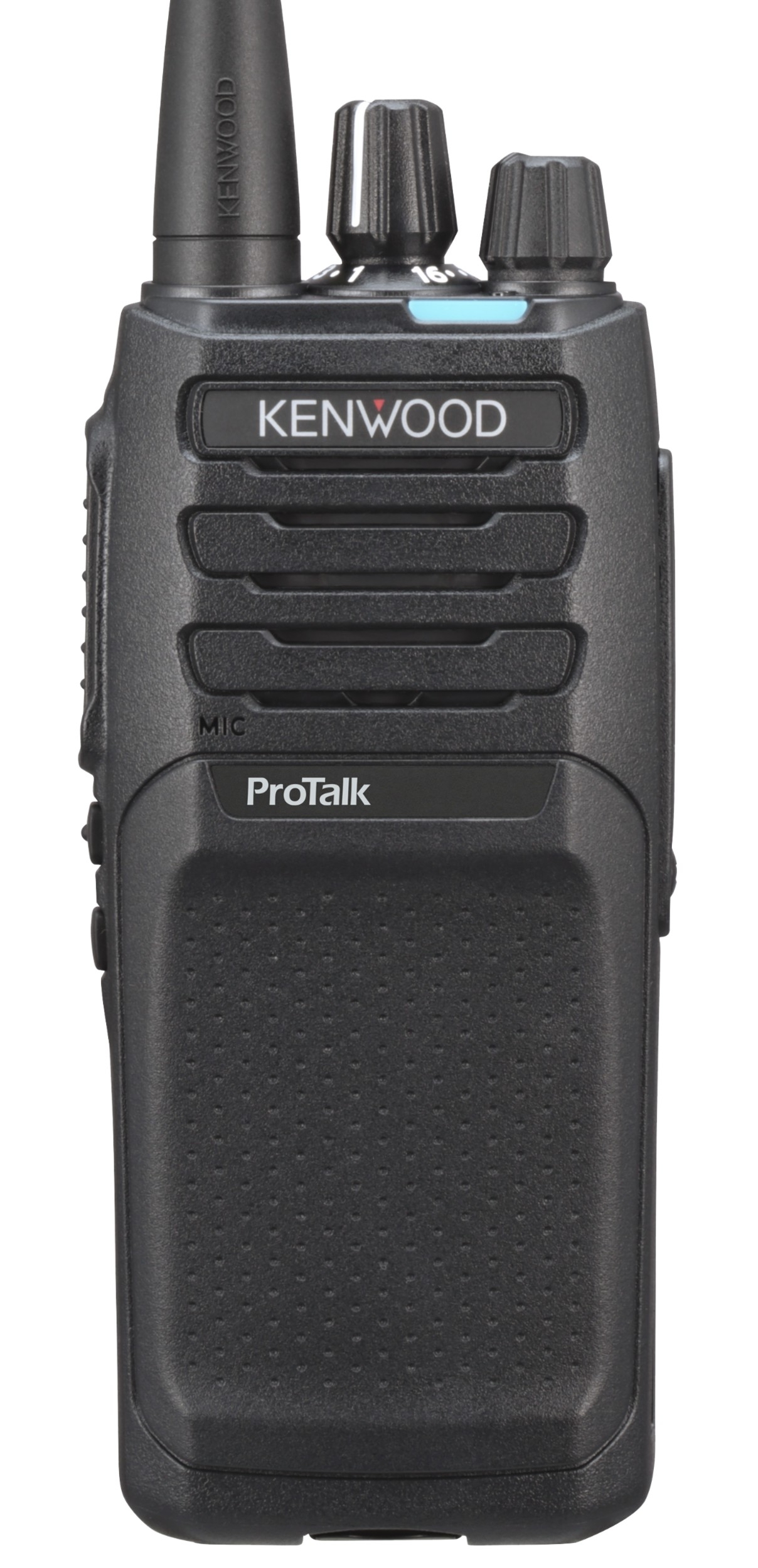
Kenwood NX-1300DUBK Two-Way Radio - 5W, 64C, Analog, Digital DMR, UHF(450-520MHz) - K01
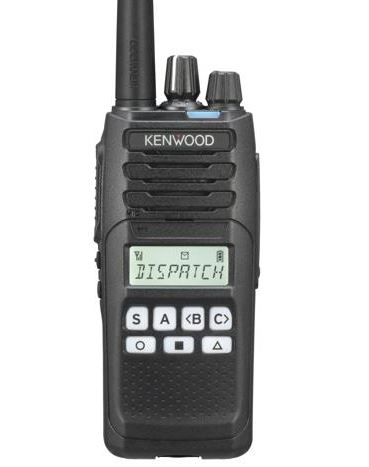
Kenwood NX-1200AVK2 Two-Way Radio - 5W, 260C, Analog, LCD, LKP, VHF(136-174MHz) - K01

Hytera HP782-G-BT-V1 Two-Way Radio, 5W, 1024C, BT, DMR, DTMF, GPS, IP68, OLED, VHF(136-174MHz) - H08

Motorola MotoTRBO R2-UHF-DMR Two-Way Radio - 4W, 64C, Analog/DMR, NKP, UHF(400-480MHz) - AAH11YDC9JA2AN - M03N
How to Get an FCC Business Radio License (Part 90 Guide)?
Articles
Get a clean, compliant business radio license the first time. This guide walks you through Part 90 basics, frequency coordination, emissions (analog/DMR), filing steps, construction notifications, and simple practices that keep your license healthy.
Contact us for assistance - general@twowayradio.com
-
 What is the difference between UHF and VHF radios?ArticlesUnderstanding the Physical Properties and Range of UHF and VHF signals? VHF signals have longer wavelengths, enabling them to travel longer distances, especially over open terrain and water. They are best for outdoor use when there are fewer obstacles. UHF signals have shorter wavelengths, which allow them to penetrate obstacles like walls, trees, and urban structures more effectively, making them preferable for indoor or city settings. UHF generally has a shorter range compared to VHF in open areas.
 -
 Best Two Way Radio Brands - Kenwood, Hytera, Motorola, ICOM?ArticlesTwo-Way Radio Brands: A Buyer's Guide Understanding brand differences, quality tiers, and what to look for before you buy of the Major Two Way Radio Manufacturers
Two-Way Radio Case Studies
-
 How Thermo Fisher Scientific Upgraded Facility Communication with Ritron Call Boxes and Hytera DMR RadiosTwo-way Radio Case StudiesThermo Fisher Scientific's Fisher Clinical Services facility in Allentown, PA deployed 30 Ritron JBS-447D UHF call boxes and 40 Hytera BD552i DMR two-way radios to solve critical gaps in communication, worker safety, and operational efficiency. Partnering with TwoWayRadio.com for solution design, custom programming, and ongoing support, the Allentown team now has facility-wide wireless coverage, instant emergency call capability at every entry point and work zone, and a scalable digital radio platform built for a GMP-regulated clinical environment.
 -
 Discover how the ICOM F2000 two-way radio keeps restaurant teams connected, improves service speed, and enhances staff safety across every shiftTwo-way Radio Case StudiesThe fast-paced environment of a full-service restaurant demands instant, reliable communication — from the host stand to the kitchen, parking lot to the manager's office. The ICOM UHF two-way radio is purpose-built for exactly these conditions. With an IP67 waterproof and dust-tight rating, they holds up through busy dish rooms, outdoor patio stations, and spill-heavy kitchen floors without missing a beat. Its oversized 36mm front-facing speaker delivers up to 800mW of audio output is loud enough to cut through the noise of a Saturday dinner rush, while the built-in BTL amplifier ensures every call-out is heard clearly, even in open kitchens with hood vents running at full power. Restaurant managers rely on the 14-hour battery life to carry staff through double shifts without a recharge interruption. The Man Down and Lone Worker safety features add a layer of protection for closing staff, parking attendants, and anyone working in isolated areas of large properties. Channel announcement lets team members switch between host, kitchen, and management channels without even glancing at the radio — critical when both hands are full of plates. Compact at just under an inch thick and weighing less than 9 ounces with battery, the clips discreetly to a uniform without getting in the way of tableside service.
 -
 How Tennessee Grasslands Golf & Country Club Uses Hytera DMR Two-Way Radios Across 36 HolesTwo-way Radio Case StudiesTennessee Grasslands partnered with TwoWayRadio.com — a Stillwater, MN-based company with 25 years of two-way radio expertise and recognized specialists in Hytera Digital DMR solutions — to design and deploy a purpose-built communications system across their expansive lakeside property in Gallatin, Tennessee. The result is a fleet of Hytera BD612i DMR radios running through a centrally located Hytera repeater and antenna that blankets both championship courses, the clubhouse campus, and all lakeside amenities with seamless, crystal-clear digital coverage.
 -
 How Astro Shapes Uses Kenwood DMR Two-Way Radios to Run a High-Output Aluminum Extrusion FacilityTwo-way Radio Case StudiesAstro Shapes LLC, an ISO-certified aluminum extrusion manufacturer in Struthers, Ohio, deployed 44 Kenwood NX-1300DUBK DMR two-way radios across its production floor to solve a critical challenge: real-time communication in a high-noise, industrial environment. Paired with IP67-rated Voiceporter speaker microphones and six-pocket multi-unit chargers, the system connects extrusion, finishing, fabrication, and shipping teams instantly — supporting the company's on-time delivery guarantee and Total Quality Assurance Program.
 -
 How an AS9100D-Certified Aerospace Distributor Uses Hytera HP782 DMR Radios to Coordinate Receiving, Fulfillment, and ShippingTwo-way Radio Case StudiesThis case study explains how Associated Aircraft Supply Co. is a 70-year-old aerospace electromechanical distributor serving Boeing, Bell Helicopter, and Lockheed Martin — uses Hytera HP782 UHF and VHF DMR radios from TwoWayRadio.com to maintain real-time coordination across their certified distribution center in Grapevine, Texas
 -
 How Driftwood Shores Resort Uses Digital Two-Way Radios to Run a Seamless Oceanfront OperationTwo-way Radio Case StudiesDriftwood Shores Resort on Oregon's Heceta Beach relies on Kenwood ProTalk digital two-way radios to keep housekeeping, maintenance, events, and guest safety teams connected across a sprawling beachfront property. See Kenwood Two Way Radios and the right accessories solved the real communication challenges of a coastal resort.
 -
 How Retail Box Stores Use Two-Way Radios for Daily Operations (And Why Kenwood NX-1300AUK Is the Top Choice)Two-way Radio Case StudiesRetail operations demand more from a two-way radio than most industries — 100,000+ square feet of coverage, multi-department channel management, 12-hour battery life, and audio loud enough to cut through a busy warehouse. After comparing the top UHF business radios on the market, the Kenwood NX-1300AUK stands out for its combination of 5-watt output, IP55 durability, digital upgrade capability, and industry-leading 3-year warranty.
 -
 M/V Sea Venture: Deploying a Motorola DMR Radio Network Aboard a U.S. Research VesselTwo-way Radio Case StudiesM/V Sea Venture — communications solution (TwoWayRadio.com) supplied a vessel-wide UHF DMR radio network for the M/V Sea Venture, a 347 ft research and survey vessel operated by Mega Marine, LLC and managed by Edison Chouest Offshore. The system supports 54 crew members across all operational groups with seamless ship-wide coverage and regulatory SOLAS compliance.
 -
 Hotel communication solution with bus shuttle fleet using Hytera PoC Push-to-Talk radios, the (PNC360S, PNC380S, MNC360) + HORIZON Nationwide PoC platformTwo-way Radio Case StudiesHotel communication solution with bus shuttle fleet using Hytera PoC Push-to-Talk radios, the (PNC360S, PNC380S, MNC360) + HORIZON Nationwide PoC platform. The PNC360S is a smartphone-style PoC radio. Front desk agents or dispatch staff often carry these, since they can run the HORIZON client app, send texts, share GPS location, and handle voice calls — all in one pocket-sized device. A concierge might use one to track where the shuttle is in real time. The PNC380S adds a larger battery and more rugged build, making it well suited for shuttle drivers who are in and out of vehicles all day, exposed to weather at the curbside. Its longer talk time matters on busy airport routes. The MNC360 is a mobile/in-vehicle PoC unit that mounts in the shuttle itself. It ties into the vehicle's power system so battery life is never a concern, and it gives drivers a dedicated, dash-mounted radio rather than a handheld device they have to manage while driving. Some hotels wire it into the vehicle's speaker system for hands-free operation.
 -
 Hands-Free Radio for Crane Operators: OSHA 1926.1420 Compliance GuideTwo-way Radio Industry Use CasesCrane operator needs hands-free radio communication for crane operators using a PTT (Push-to-Talk) foot pedal is a specialized system designed to enhance safety, efficiency, and clarity on construction sites or other settings where cranes are used. The core concept involves enabling the operator to maintain continuous contact with ground staff or other operators without needing to remove their hands from the crane controls.
 -
 School Safety Communications Guide - Two-Way RadiosTwo-way Radio Case StudiesTwo-Way Radios for School Safety: Reliable Communication When It Matters Most Schools rely on two-way radios as essential school safety tools, enabling instant, reliable, and coordinated communication between staff during emergencies, lockdowns, and everyday campus operations. Unlike cell phones, two-way radios for schools offer push-to-talk instant connectivity with zero call setup delays — a critical advantage when every second counts. Designed for durability in extreme conditions, school two-way radios perform consistently even when cellular networks experience outages or congestion. Whether coordinating a campus evacuation, managing a medical emergency, or maintaining daily staff communication, two-way radios ensure school administrators, security personnel, and teachers stay connected without dependence on public infrastructure. Key reasons schools choose two-way radios over cell phones: Instant push-to-talk communication — no dialing, no waiting Network-independent operation — works during cellular outages and high-traffic events Rugged, durable hardware — built to withstand demanding school environments Group communication capability — reach all staff simultaneously with one transmission Cost-effective school safety solution — lower per-unit operational cost than mobile devices
 -
 Island Resort case study - connecting multi buildings with difficult terrainTwo-way Radio Case StudiesTwo-Way Radios at a Tropical Island Resort: A Case Study in Seamless Hospitality Communication When guest satisfaction depends on split-second coordination, reliable communication isn't a luxury — it's a operational necessity. This case study explores how a tropical island resort deployed a professional two-way radio system with a repeater to solve critical communication challenges across a complex, multi-terrain property. The Challenge: Communicating Across a Sprawling Resort Environment Tropical island resorts present unique communication obstacles that standard consumer walkie-talkies and cell phones simply can't overcome. Staff at this property faced daily difficulties staying connected across: Multiple outdoor pools and water features Expansive beachfront areas with ambient noise Dense tropical landscaping that blocked radio signals Varying elevations and terrain throughout the property Guest-facing areas requiring discreet, professional communication Without a reliable system, response times suffered. Housekeeping couldn't quickly alert maintenance. Beach attendants couldn't coordinate with the front desk. A delayed response to a guest request — or worse, a safety incident — could define an entire vacation experience.
 -
 Empowering Government Procurement LogisticsTwo-way Radio Case StudiesA New York–based MBE supplier specializing in heavy-duty truck and snow equipment parts transformed its fleet communication by deploying 600 Otto Storm V2-S2CM11121-S speaker microphones. These intrinsically safe, weather-sealed units help drivers and dispatchers coordinate deliveries, streamline government procurement operations, and maintain safety in all conditions.
This Months Popular Two-Way Radio Solutions!

Technical Resources

Two-Way Radio Spectrum Efficiency in Analog Radios
Indoor
Two-Way Radio Channel Capacity and Spectrum Efficiency in Modern Analog Radios

DMR vs NXDN vs P25: Digital Standards Explained for Business Buyers
Articles
For most businesses, DMR is the default choice, NXDN is a strong alternative for Kenwood and Icom fleets, and P25 is only worth its cost if you must talk to public safety.
All three are open digital standards for professional two-way radio. Each one delivers clearer audio at the edge of coverage, longer battery life, and features analog radios cannot match: unit IDs, text messaging, GPS, man-down alerts, and encryption. Where they differ is in how they use the channel, which manufacturers support them, what they cost, and who else you can talk to.
This guide is written for operations managers, facilities leaders, and IT buyers who are replacing analog radios or adding a new fleet. It skips the engineering jargon where it can and explains it where it matters.

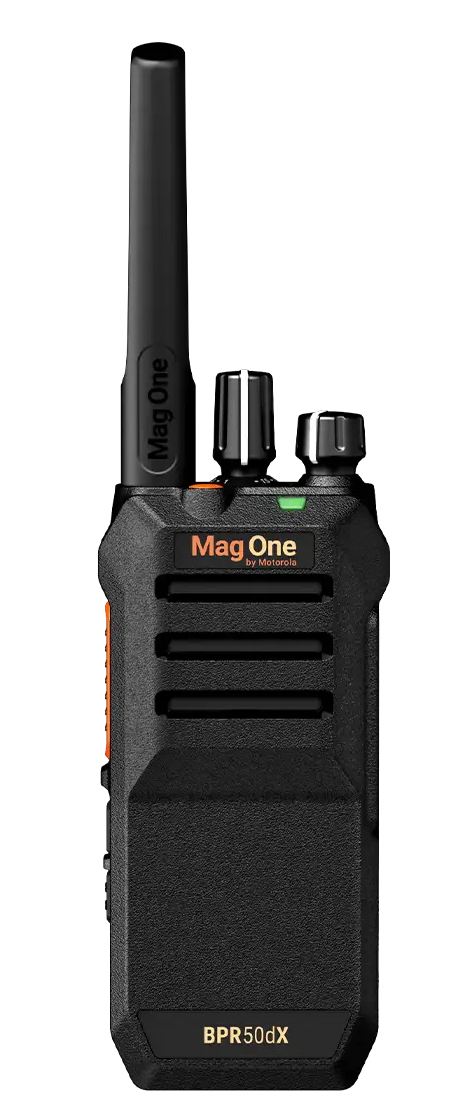
Motorola BPR50dX vs CP100d vs R2 vs R5: Which UHF Two-Way Radio Fits Your Team?
Articles
Four Motorola UHF radios, four very different jobs. Here is how the BPR50dX, CP100d, R2 and R5 compare—and which one to buy for retail, warehouse, construction or hazardous-location work.
The Top Features to Look for in a Business Radio
Technical Resources
Stop guessing on specs. Learn the essential features that make business radios work in the real world—clear audio, rugged design, battery life, digital capacity, privacy, and accessories—so your team communicates faster and safer.
Two way radio repair and how to fix?
Articles
Fix your two-way radio fast. Expert repair tips, troubleshooting guides, and FAQs covering dead batteries, audio problems, programming errors, and antenna faults.
Two-Way Radio Channel Capacity and Spectrum Efficiency in Modern Analog Radios
Digital
Two-Way Radio Channel Capacity and Spectrum Efficiency in Modern Analog Radios
Programming Your Business Radios: A Step-by-Step Guide
Technical Resources
Learn how to program your business two-way radios step-by-step. From gathering frequency information to customizing channels, this guide simplifies the process for any workplace.

2026 Buyer’s Guide Two-Way Radios for Business
Articles
This is high-level buyers guide for 2026 two way radio buyers. We get you started with why two way radio, which manufacturers are ideally matched for your needs.
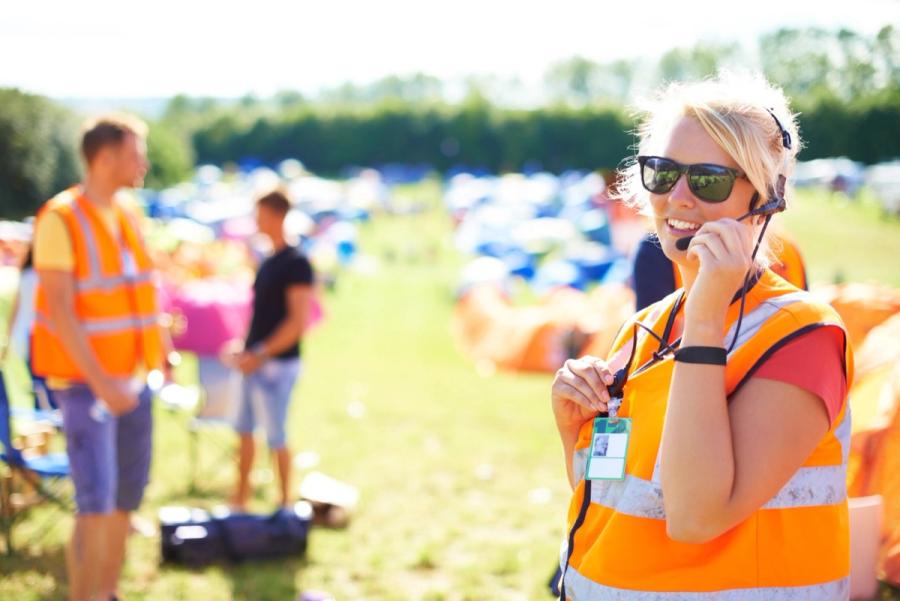
Event Management Made Simple: The Right Radios for Seamless Coordination
Articles
Security firms utilize two-way radios for effective communication during large events to ensure safety and coordination. Here are some key ways they are used:
Real-Time Communication: Two-way radios allow security personnel to communicate instantly with each other, facilitating quick responses to incidents or emergencies.
Coordination of Resources: They enable security teams to coordinate movements and deployments, ensuring that all areas of the event are properly monitored and secured.
Emergency Response: In the event of an incident, security can quickly mobilize additional resources or call for assistance, which is crucial for effective emergency management.
Crowd Management: Radios help in managing crowd flow, directing people to various areas, and implementing safety protocols.
Confidentiality and Clarity: Using radios allows for secure and clear communication, reducing the risk of information being overheard by unauthorized individuals.
Monitoring and Reporting: Security staff can report suspicious activities or incidents in real time, providing situational awareness to command centers.
Durability and Reliability: Two-way radios are often designed to withstand harsh conditions, ensuring communication remains uninterrupted during events.
Overall, two-way radios enhance the operational efficiency and safety of large events, contributing to a well-coordinated security response.
What is the difference between UHF and VHF radios?
Articles
Understanding the Physical Properties and Range of UHF and VHF signals?
VHF signals have longer wavelengths, enabling them to travel longer distances, especially over open terrain and water. They are best for outdoor use when there are fewer obstacles.
UHF signals have shorter wavelengths, which allow them to penetrate obstacles like walls, trees, and urban structures more effectively, making them preferable for indoor or city settings. UHF generally has a shorter range compared to VHF in open areas.

Do I need a license for two-way radios?
Articles
Do I need a license for two-way radios?
FCC two-way radio licensing requirements for FRS, GMRS, and business-band radios. License-exempt vs. licensed services explained. Expert help available

Kenwood NX-P1300AUK Two-Way Radio Deep Dive Overview
Articles
An in-depth look at the Kenwood NX-P1300AUK Two-Way Radio — a robust, high-powered communication device built to handle the toughest on-site conditions. Praised for its exceptional audio quality, seamless analog and digital compatibility, and a rugged, weather-resistant build, the NX-P1300AUK keeps teams connected, coordinated, and working at peak efficiency across a wide range of environments — from construction sites and warehouses to hotel lobbies, schools, arenas, and field operations.
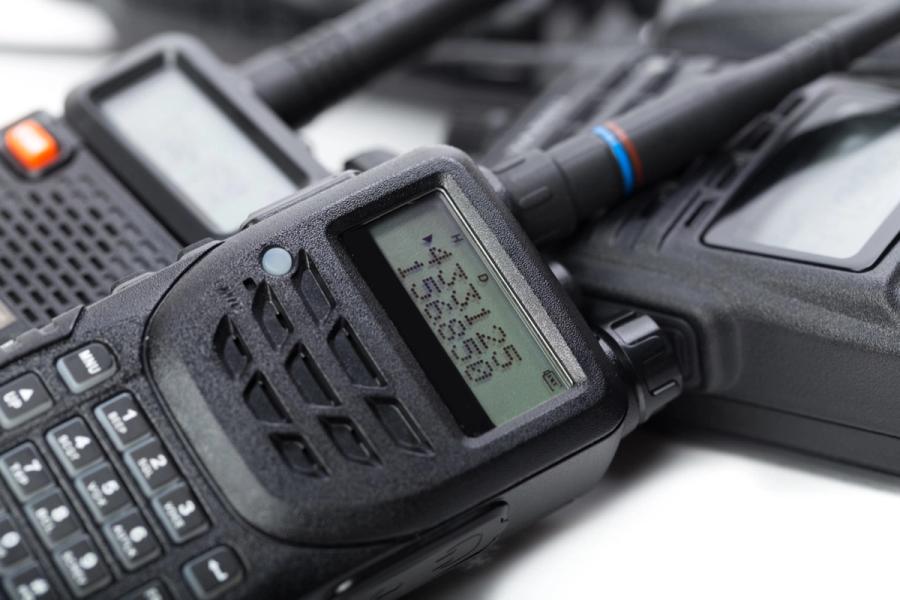
Kenwood vs Motorola vs Hytera vs ICOM: Which Brand Is Best for Your Business?
Articles
Almost every business that needs reliable communications eventually lands on the same four names: Motorola, Kenwood, Hytera, and ICOM. These are the brands that dominate the professional land mobile radio (LMR) market worldwide, and between them they cover virtually every industry that relies on two-way radio — construction, warehousing, hospitality, healthcare, education, public safety, marine, and aviation.
The problem is that they are not interchangeable. Each brand has a different engineering philosophy, a different support footprint, a different pricing strategy, and a different sweet spot. Picking the wrong one for your environment can mean years of frustrating dead zones, incompatible accessories, or radios that outlive their software support. This guide breaks down exactly where each brand wins — and where each one does not.
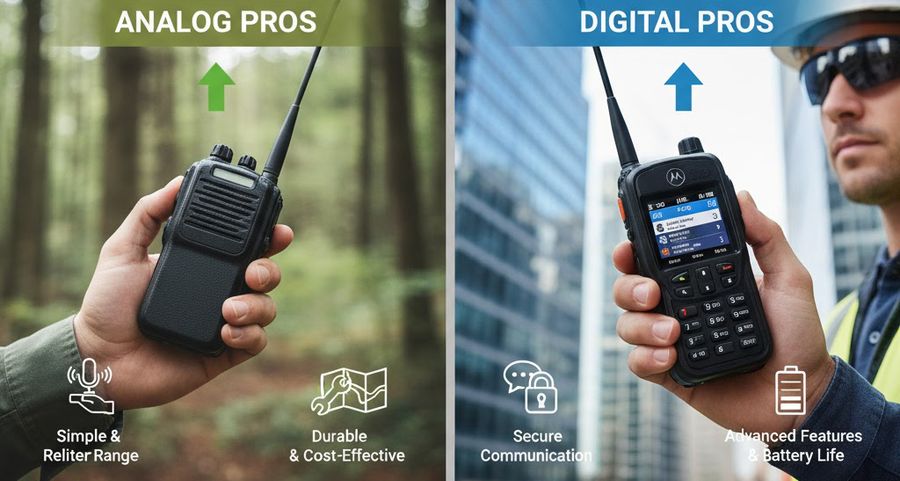
The Pros and Cons of Analog vs. Digital Two-Way Radios
Technical Resources
Choosing between analog and digital two-way radios affects coverage, audio quality, capacity, privacy, and long-term cost.
Essential Two-Way Radio Accessories for Your Business
Technical Resources
The right accessories make radios clear, reliable, and easy to use. Learn which RSMs, earpieces, headsets, chargers, antennas, and carry options to choose—and how to run a simple accessory program that keeps your team connected.

How do repeaters extend two-way radio range?
Articles
How do repeaters extend two-way radio range?
Learn how repeaters boost two-way radio range by receiving weak signals and instantly retransmitting them at higher power from elevated locations — extending coverage from miles to hundreds of miles.

Why Analog Two Way Radios are still a reliable choice?
Analog
Learn how analog two-way radios deliver instant, license-free communication across job sites, events, and backcountry trails. Compare top models, ranges, and features before you buy.
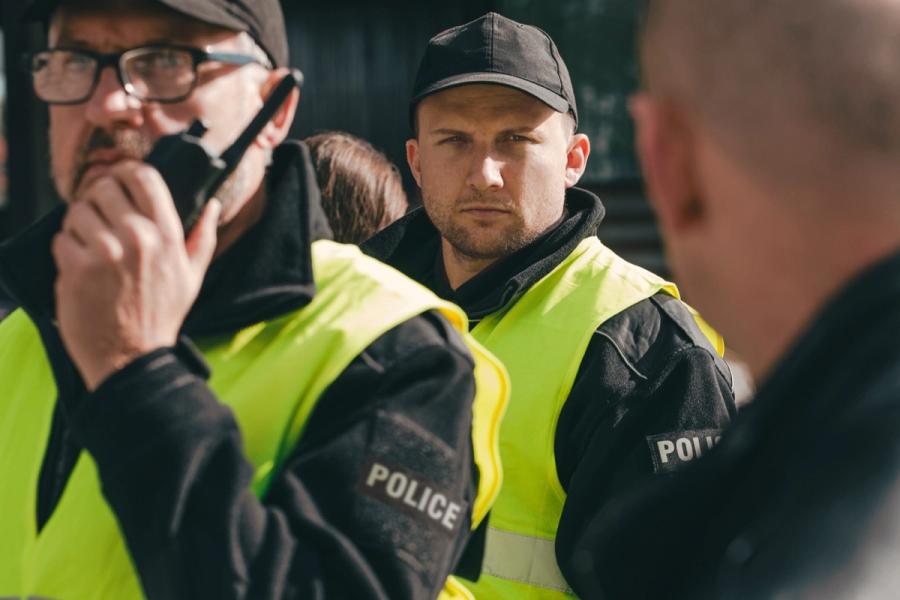
Best business two-way radios for small business?
Articles
A practical, field-tested method for choosing business two-way radios for small business. Learn how to nail coverage, capacity, clarity, durability, licensing, and programming—then deploy with a simple plan that works under stress.
Best Two Way Radio Brands - Kenwood, Hytera, Motorola, ICOM?
Articles
Two-Way Radio Brands: A Buyer's Guide
Understanding brand differences, quality tiers, and what to look for before you buy
of the Major Two Way Radio Manufacturers

Best Practices for Two-Way Radio Maintenance and Care
Articles
Learn how to clean, inspect, and store your two-way radios properly. Simple maintenance habits that extend lifespan and prevent costly repairs or replacements

Kenwood NX-1000 Series Digital Handheld Transceiver Overview
Articles
The focus of this article is to understand the Digital options for the Kenwood NX-1000 Series Digital Handheld Transceivers / Two Way Radios / Walkie Talkies.
The NX 1000 series supports the NXDN or Digital Mobile Radio (DMR) digital protocols to enhance business efficiency or FM analog for its simplicity. The company's One "K" Fits-All solution offers a selection of two-way radios with the same operability as predecessor radios. The model matrix also includes body variations, with or without a backlit LCD and a keypad. Other features include a seven-color LED indicator and the popular KENWOOD two-pin audio accessory connector. Plus, mixed-mode operation ensures seamless integration with legacy radios while smoothing the onward migration path to digital.
This article explains the NX 1000 series in detail
buy Kenwood two way radio
Kenwood radio best price
Kenwood radio in stock
Kenwood radio dealer
Kenwood radio distributor

Hytera HP602 Two-Way Radio Deep Dive Overview
Articles
The Hytera HP602 H-Series DMR radios are the next-generation in creative style and functionality that elevates the industry standard in professional two-way radios.
The HP602 is the new state-of-the-art in digital radio communications, providing a more efficient experience with loud and clear audio, longer battery life, intuitive user interface, extended range, and ruggedness.
The HP602 features a one-line OLED display and delivers exceptional value with abundant features, GPS, a 20-hour Lithium Polymer battery, and industry-leading audio performance.
The HP602 H-Series radios empower employees in customer service or severe working environments with efficient a
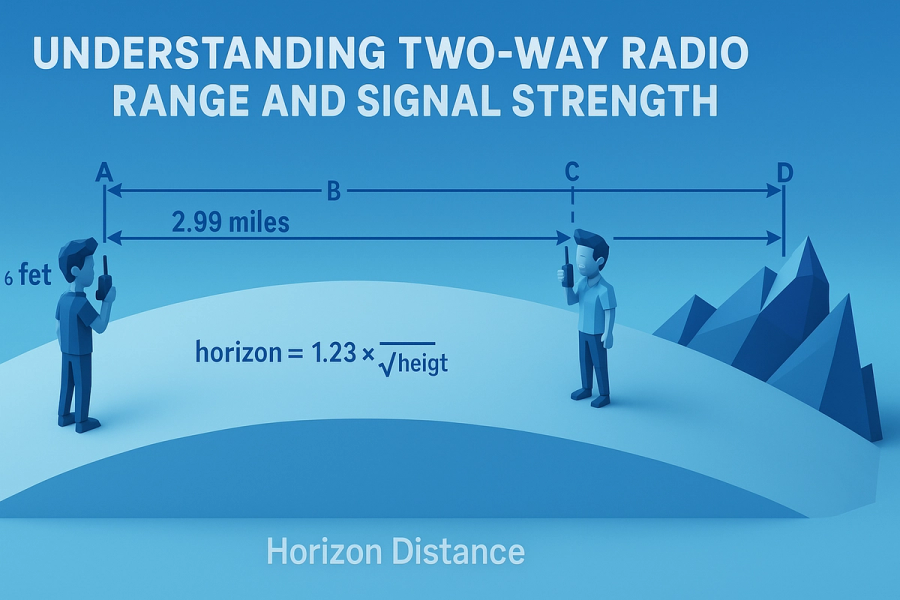
How far do two-way radios reach?
Technical Resources
How far do two-way radios reach?
Two-way radio range and signal strength are determined by line-of-sight propagation and numerous environmental and technical factors. Radio waves generally travel in straight lines, so any physical obstructions or limitations in signal power can reduce the effective communication distance.
This guide explains the variables that matter, how to estimate performance in the real world, and what steps you can take to extend coverage without guesswork.

Motorola CLS Two-Way Radios CLS1110 and CLS1410
Two-way Radio Case Studies
Motorola CLS 1410 and CLS 1110 two-way radios are known for their clear audio, lightweight and rugged design, and ease of use. They are ideal for coverage up to 200,000 square feet or 15 floors indoors, supporting communication in retail, hospitality, warehousing, restaurants, healthcare, and education settings

Essential Two-Way Radio Equipment for Professional Communication: Kenwood PKT-300
Articles
The Kenwood PKT300 is a compact 2-watt UHF radio offering 6 channel operation, MIL STD durability, and crystal-clear audio, built for retail, hospitality, education, and professional on-site teams.
How to Get an FCC Business Radio License (Part 90 Guide)?
Articles
Get a clean, compliant business radio license the first time. This guide walks you through Part 90 basics, frequency coordination, emissions (analog/DMR), filing steps, construction notifications, and simple practices that keep your license healthy.
Contact us for assistance - general@twowayradio.com
Motorola CLS 1110 / 1410 frequencies
Technical Resources
If you're changing the frequency on your Motorola CLS series radio you will select a number between 1 and 56 that relates to a frequency. For example, if you need frequency 467.900, you'll want to select frequency number 7.

Two-Way Radio Earpiece & Wire Types: D-Ring, G-Hook, Acoustic Tube & More
Two-way radio accessories
When choosing an earpiece for a two-way radio, understanding the available wiring configurations and earpiece styles will help you find the best fit for your environment and workflow.
Wire Types:
Two-way radio earpiece cables come in three main configurations. Type 1 is a single-wire design featuring a coiled cable paired with a clear acoustic tube, offering a lightweight and low-profile setup suited to plain-clothes or security work. Type 2 is a two-wire configuration with reinforced cabling that separates the audio and push-to-talk (PTT) functions, providing greater durability for everyday professional use. Type 3 is a three-wire heavy-duty cable that dedicates individual wires to audio, PTT, and the microphone, making it the preferred choice for tactical, law enforcement, or high-noise industrial environments where reliability is critical.
Earpiece Styles:
Earpieces are available in several styles to suit different operational needs. Acoustic tube and surveillance-style earpieces use a clear hollow tube and in-ear tip to deliver sound discreetly, making them a common choice in security and close-protection roles. Audio quality is generally excellent, though the tubes can become blocked over time and the tips may cause discomfort during extended wear. D-ring and C-hook earpieces rest just outside the ear canal and use a shaped hook to stay in place, making them easy to share between users due to better hygiene. They are less discreet than acoustic tube options and can be more susceptible to background noise. G-shape earpieces function similarly to the C-hook but wrap more securely over the ear, making them a popular general-purpose option that balances comfort and stability, though background noise pickup remains a consideration. Earbud-style earpieces offer the most compact and discreet option, sitting directly in the ear, but they can struggle to stay in place during active use and may become uncomfortable over longer shifts.