
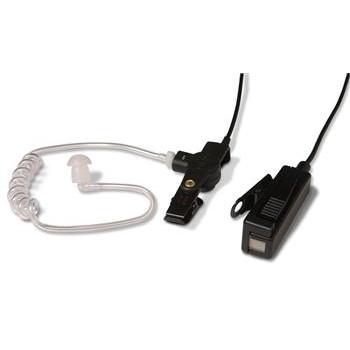

Two-Way Radio Earpiece & Wire Types: D-Ring, G-Hook, Acoustic Tube & More
By Bruce Fogelberg - www.twowayradio.com. We are commercial radio experts since 2000. , Two Way Radio Expert
Published: February 24, 2025
Last updated: March 27, 2026
On this page
- Two-Way Radio Earpiece & Wire Types: D-Ring, G-Hook, Acoustic Tube & More
- Earpiece Styles at a Glance: Quick Comparison
- Earpiece Wear Styles Explained
- Wiring Configurations: 1-Wire, 2-Wire, and 3-Wire Kits
- Earpiece Recommendations by Industry
- Other Important Considerations Before You Buy
- How to Choose the Right Earpiece: A Decision Guide
- Frequently Asked Questions
- Summary
Two-Way Radio Earpiece & Wire Types: D-Ring, G-Hook, Acoustic Tube & More
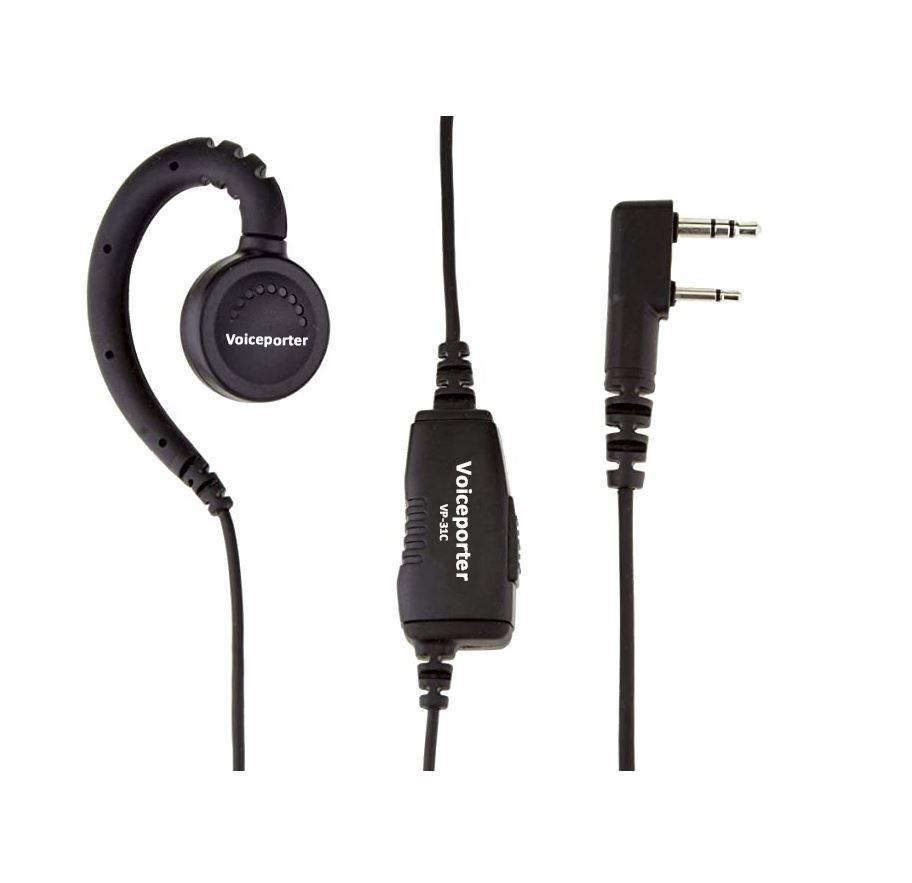
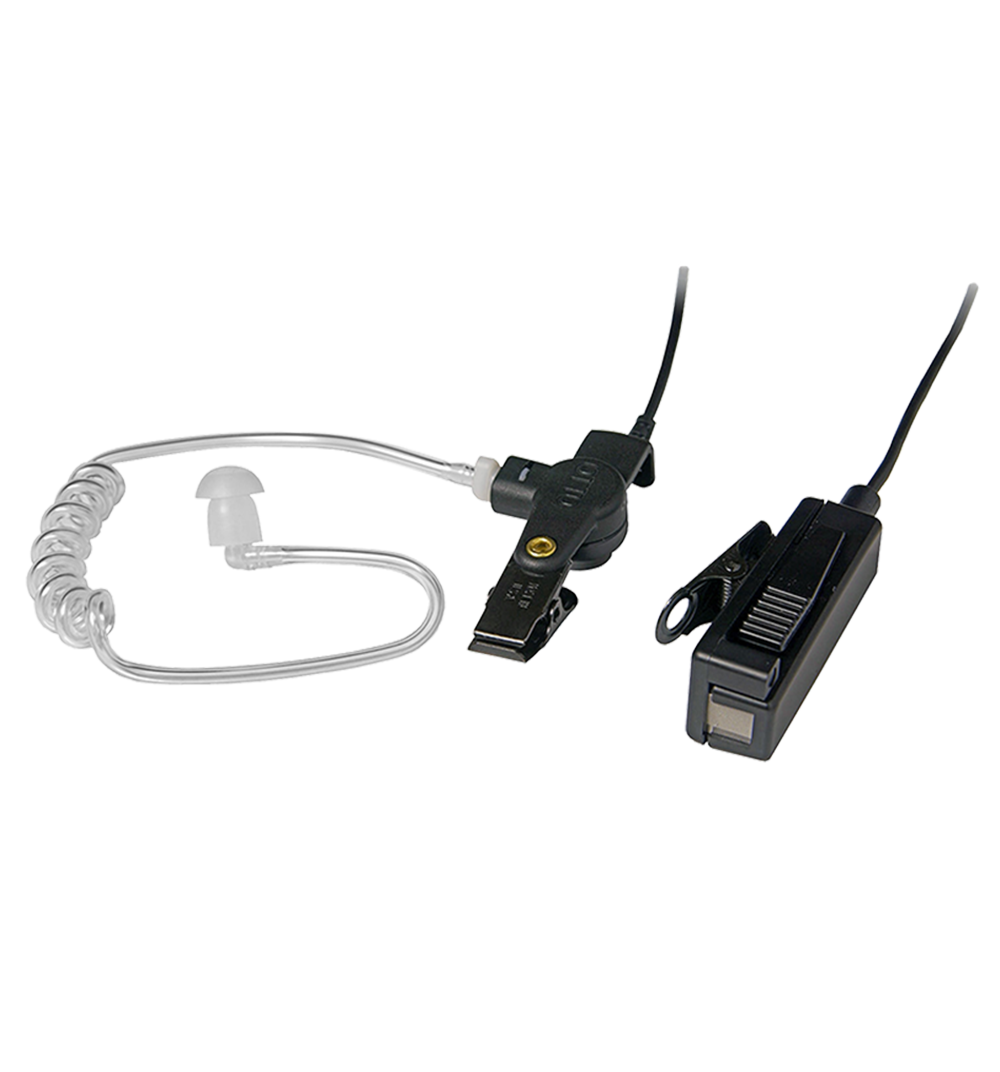
These Otto Earpiece examples reflect 1-wire, 2-wire, 3-wire options:
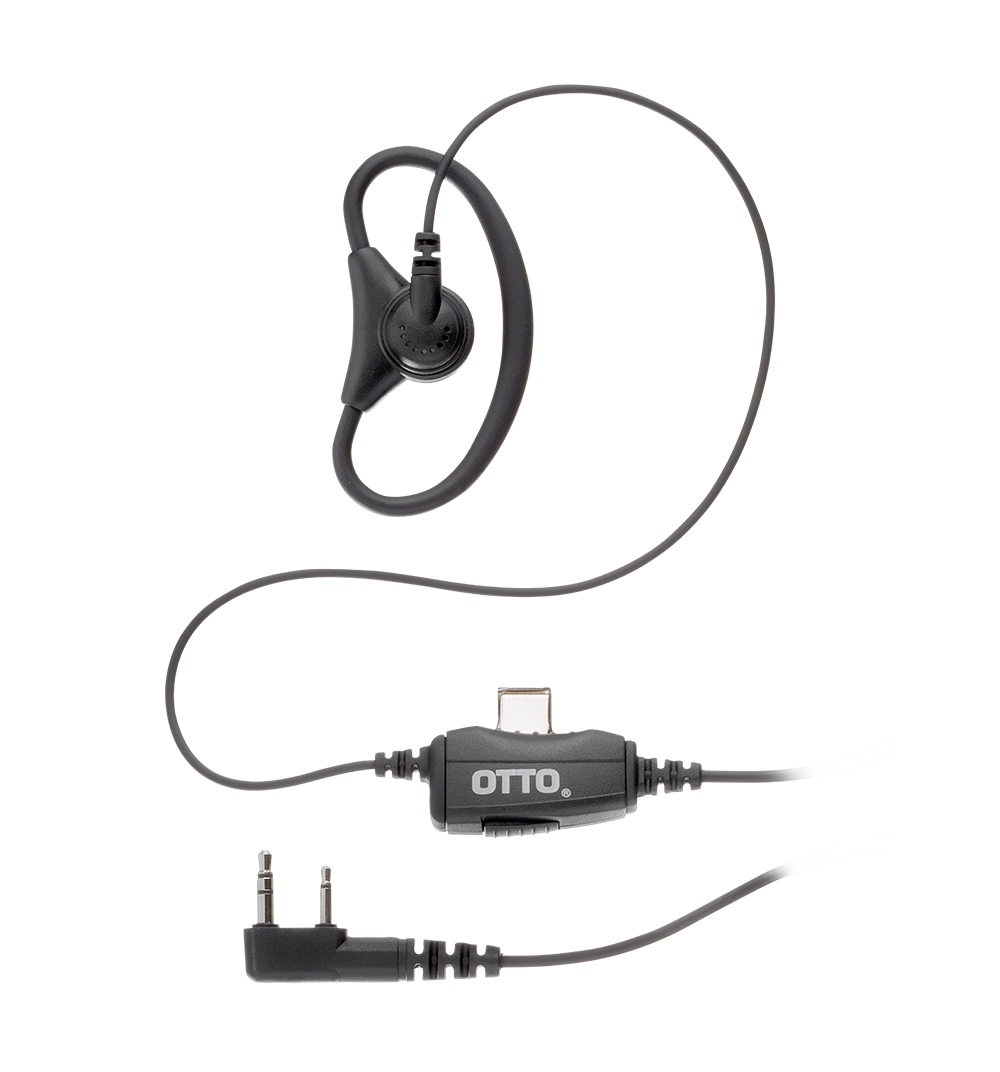
Otto E1-ET2KA131 Earpiece - 1-Wire, D-Hook - K01
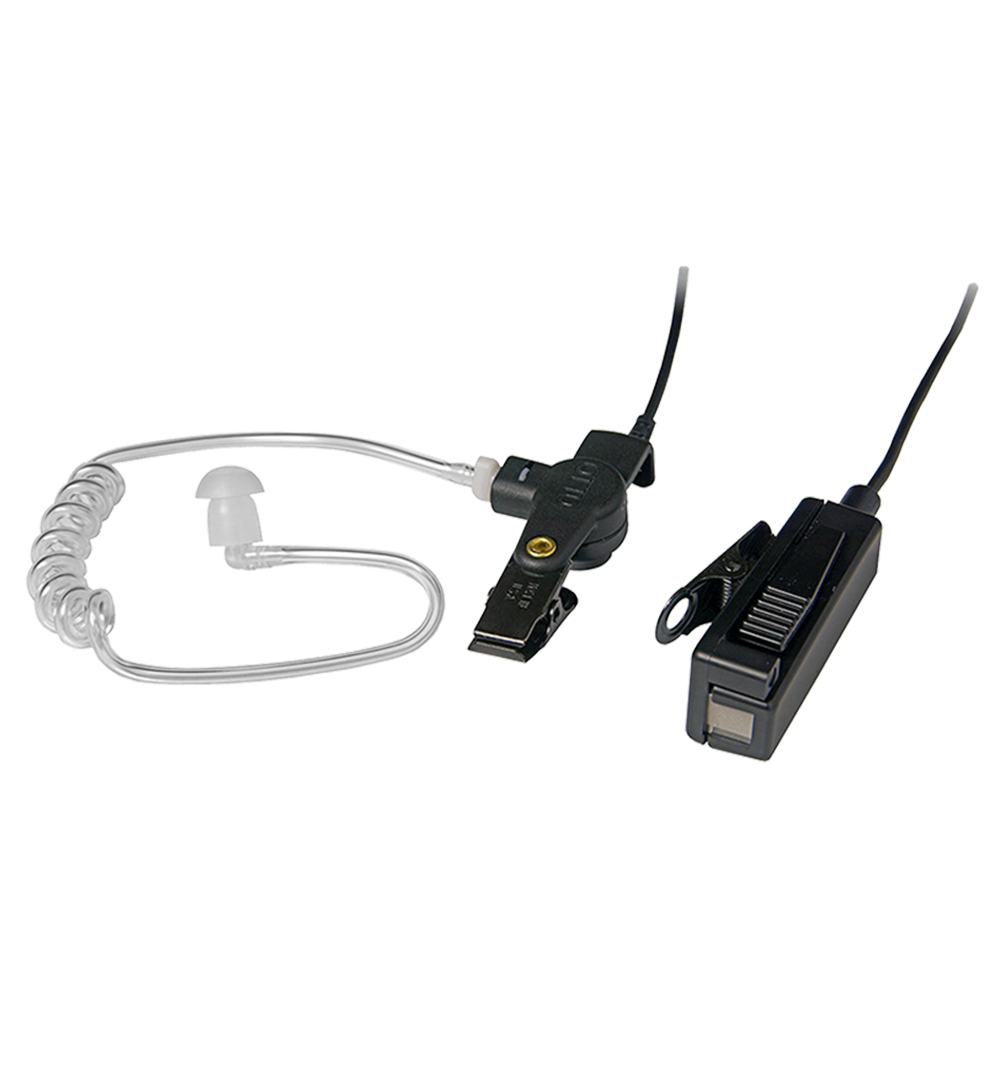
Otto Professional V1-10695 Earpiece - 2-Wire, Surveillance Kit - K11
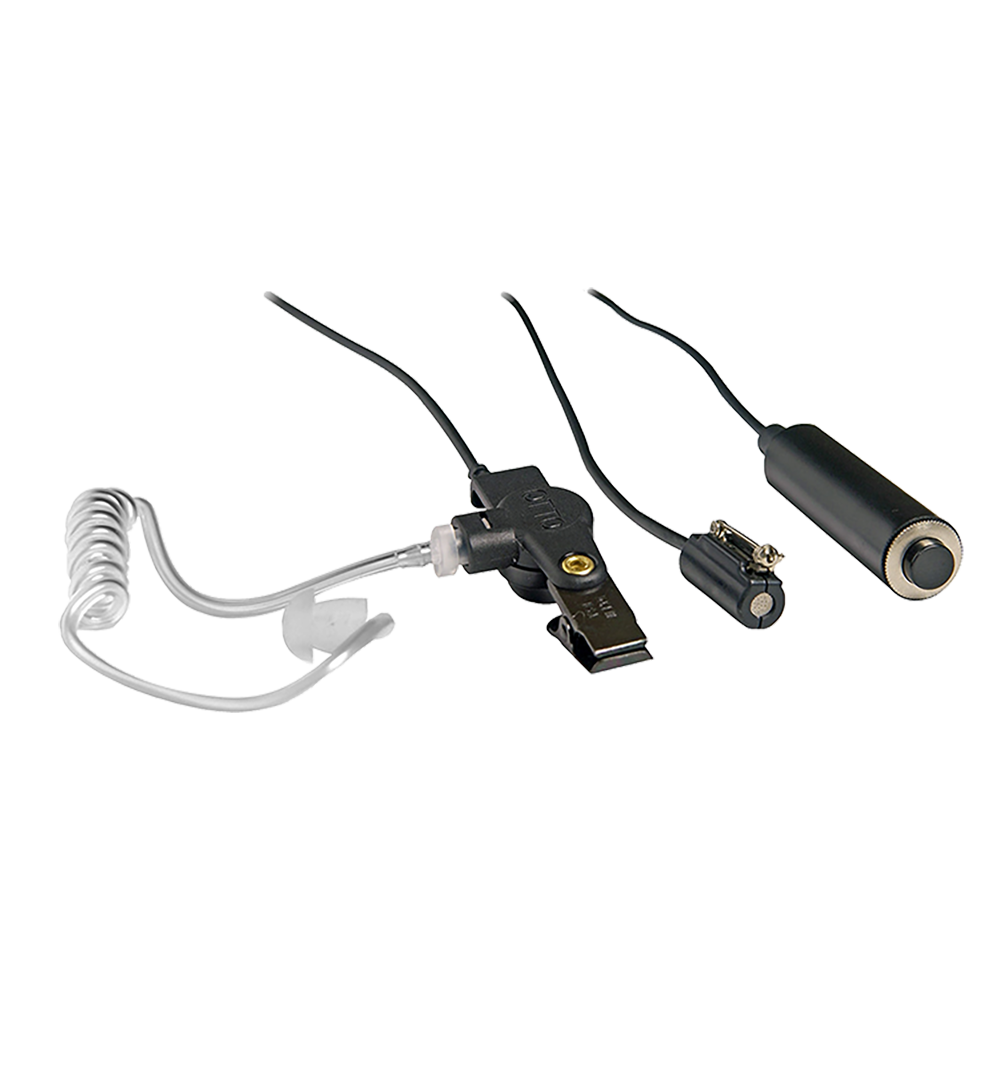
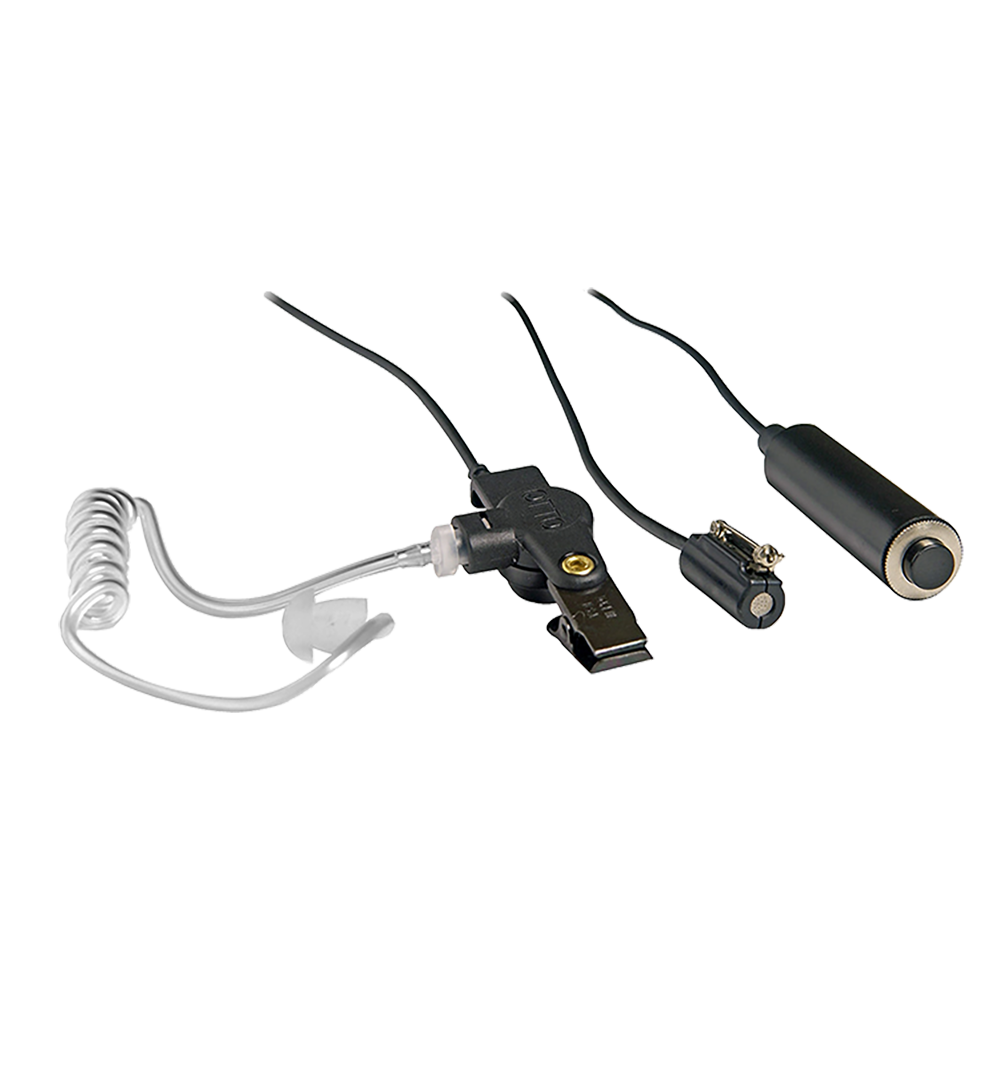
Otto Professional V1-10284 Earpiece - 3-Wire, Surveillance Kit - M03N
Choosing the right earpiece for your two-way radio can mean the difference between crystal-clear communication and missed messages in the field. Whether you work in security, hospitality, construction, or event management, the earpiece style and wiring type you choose directly affects your comfort, situational awareness, and communication reliability.
This guide covers every major earpiece style, wiring configuration, and key consideration — so you can find the best fit for your team and your environment.
Earpiece Styles at a Glance: Quick Comparison
Use this table to quickly compare the main earpiece styles before diving into the details below.
Earpiece Wear Styles Explained
These refer to how the earpiece physically sits on or in your ear. The right style depends on your environment, how long you wear it, and how discreet you need to be.
1. In-Ear / Earbud Style
The earpiece sits directly in your ear canal, making it the most discreet option available. It is well-suited for customer-facing roles such as retail associates, hotel staff, and event hosts where a low-profile appearance matters.
Pros: Discreet, lightweight, easy to carry and swap between staff
Cons: Less secure during active movement; may lack noise isolation in loud environments
Best for: Retail, hospitality, light-duty office or event roles
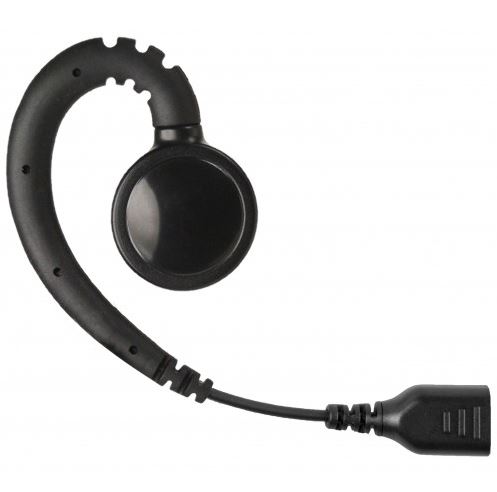
2. Ear-Hook / G-Hook Style
A hook loops over or around the outer ear, holding the speaker bud securely in place. This is one of the most popular styles for security personnel, event staff, and anyone who stays on the move. The G-hook design (named for its shape) provides a stable fit that doesn't dislodge during physical activity.
Pros: Secure fit during movement, comfortable for medium-length shifts
Cons: Slightly more visible than in-ear styles
Best for: Security, events, outdoor operations, active roles
3. D-Hook / D-Ring Style
A rigid, D-shaped hook loops over the top of the ear, holding the speaker bud firmly in the ear canal. The name comes from the shape of the hook itself, which resembles the letter "D." Like the G-Hook, it is designed for secure, hands-free wear — but the D-Hook's more structured frame provides an even more stable fit, making it a popular choice in fast-paced or physically demanding roles.
Pros: Very secure fit; durable rigid construction; stays in place during vigorous movement
Cons: Less adjustable than flexible hook designs; may feel less comfortable for users with smaller ears during extended wear
Best for: Security personnel, law enforcement support roles, warehouse operations, and any active environment where the earpiece cannot afford to shift or fall out
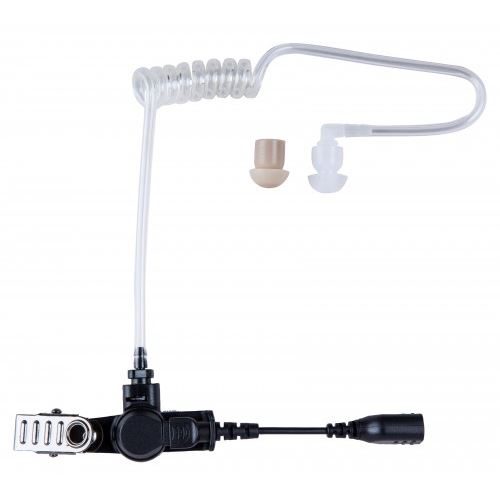
4. Acoustic Tube Earpiece
Audio travels from the radio through a hollow, clear tube into the ear canal. The main electronic component sits lower on the body — typically at the lapel or shoulder — rather than directly in or on the ear.
Pros: Highly discreet; popular in law enforcement and executive security
Cons: Slightly reduced audio fidelity vs. direct-speaker designs; tube can require cleaning
Best for: Surveillance, executive protection, security operations requiring minimal visibility
5. Single-Ear Headset
A full headset covering one ear, typically with a boom microphone and a headband or behind-the-neck band. This style provides significantly better audio isolation and mic clarity than earpiece-only designs.
Pros: High audio clarity, boom mic improves transmission quality, suitable for extended wear
Cons: More visible and bulkier; higher cost
Best for: Dispatch, warehousing, construction site supervisors
6. Dual-Ear Muff Headset
Covers both ears, providing maximum noise isolation. This is the preferred choice for environments with continuous high ambient noise, such as manufacturing floors, airports, or large outdoor events.
Pros: Best-in-class noise isolation; reduces listener fatigue on long shifts
Cons: Bulky, higher cost, reduces situational awareness of surrounding environment
Best for: Industrial facilities, airports, heavy machinery operations, long-shift dispatch teams
Wiring Configurations: 1-Wire, 2-Wire, and 3-Wire Kits
Beyond the wear style, how the earpiece is wired determines where the microphone and PTT (Push-to-Talk) button sit, and how much flexibility you have in positioning components.

1-Wire Kits
Everything — microphone, PTT button, and earpiece speaker — is integrated into a single cable running from the radio to your ear. This is the simplest, most compact setup, and it is ideal for users who want a no-fuss solution without managing multiple wires.
2-Wire Kits
One wire runs to a PTT/mic unit (usually clipped to the lapel or collar), while a second wire runs to the earpiece speaker. This allows more flexibility in mic placement and is the most common choice for security and event teams who need reliable one-handed PTT operation.
3-Wire Kits
Separate wires handle the earpiece, microphone, and PTT individually. While this adds complexity, it provides maximum control — useful in tactical or high-noise environments where each function needs to be independently positioned or replaced.
Earpiece Recommendations by Industry

Security & Surveillance: Acoustic tube or G-hook style, 2-wire kit. Discretion and PTT reliability are the top priorities. Look for clear-tube designs if operating close to the public.
Hospitality & Retail: In-ear or earbud style, 1-wire kit. Lightweight and unobtrusive. Staff appearances matter, so low-profile designs are preferred.
Construction & Industrial: Single or dual-ear headset, 2 or 3-wire kit. Noise isolation and hearing protection are critical. Look for models with high NRR (Noise Reduction Rating) or active hearing protection features.
Event Management: G-hook or ear-hook style, 2-wire kit. A balance of discretion and secure fit for staff who are constantly moving through crowds.
Warehousing & Logistics: Single-ear headset with boom mic, 2-wire. Clarity for over-distance calls matters; headsets reduce the need to repeat transmissions.
Other Important Considerations Before You Buy
Connector Compatibility
Not all earpieces work with all radios. Radio connectors vary significantly by manufacturer and model. Always verify your radio's connector type (Kenwood K1/K2, Motorola M1/M6, Hytera, ICOM, and others) before purchasing. An incompatible connector makes an otherwise perfect earpiece useless.
HD (High-Definition) Earpieces
High-definition earpieces use premium components — commonly Knowles speakers and microphones — for significantly improved audio clarity. They are designed for professional, surveillance, or high-noise applications where audio fidelity is critical. HD options typically also feature reinforced, braided cabling for extended durability. If your team relies on audio accuracy in the field, HD earpieces are worth the additional investment.
IP Rating & Durability
If earpieces will be used outdoors or in physically demanding environments, look for models with an IP54 or higher rating for dust and moisture resistance. Heavy-duty cabling (Kevlar or braided fiber reinforced) significantly extends the service life of frequently used earpieces.
Comfort for Extended Wear
For staff wearing earpieces across full shifts of 8 hours or more, ergonomic design matters greatly. Over-ear hook styles and adjustable headbands generally outperform basic in-ear designs for all-day comfort. Consider offering multiple sizes or styles if your team has varying preferences.
How to Choose the Right Earpiece: A Decision Guide
What is your environment?
Quiet retail or office settings can use lightweight in-ear styles. Noisy warehouses, outdoor sites, or event floors require better noise isolation — headset styles or acoustic tube designs.
How long will it be worn each shift?
Short duty cycles (under 4 hours) can tolerate almost any style. Full-shift wear demands ergonomic design — over-ear hooks or adjustable headsets.
How discreet does it need to be?
For surveillance or customer-facing roles, clear acoustic tube or single in-ear designs minimize visibility. For industrial roles, visibility is not a concern.
What connector does your radio use?
Check your radio's make and model against the earpiece connector specification before ordering. Connector types include Kenwood K1/K2, Motorola M1/M6/M12, Hytera PD series, and ICOM connectors, among others.
What is your budget and durability requirement?
Budget options work adequately for casual or low-frequency use. Professional security, events, or industrial applications warrant branded options with reinforced cabling and HD audio components — the per-unit cost is offset by longer service life.
How much wiring flexibility do you need?
1-wire for simplicity. 2-wire for separate PTT placement. 3-wire for full control over every component. More wires means more capability and more to manage.
Frequently Asked Questions
What is the difference between a 1-wire and 2-wire earpiece?
A 1-wire earpiece integrates the microphone, PTT, and speaker into a single cable. A 2-wire kit separates the PTT/mic assembly from the earpiece speaker, giving users more flexibility in where each component is positioned on the body.
Are two-way radio earpieces universal?
No. Two-way radio earpieces use different connector types that vary by radio manufacturer and model family. Always confirm that the earpiece connector matches your specific radio before purchasing. Most reputable earpiece products list compatible radio models and connector types in their product specifications.
What earpiece is best for noisy environments?
For high-noise environments, a headset-style earpiece — either single or dual ear — provides the best noise isolation. Dual-ear headsets with active noise reduction offer the highest performance. If discretion is also required in a moderately noisy setting, a 2-wire acoustic tube earpiece is a strong compromise.
What does HD (High-Definition) mean for a two-way radio earpiece?
HD earpieces use premium audio components — most commonly Knowles-brand speakers and microphones — to deliver noticeably clearer sound reproduction compared to standard earpieces. They also typically feature reinforced cable construction. HD earpieces are most valuable in environments where audio accuracy directly affects safety or operational performance.
How do I identify my radio's connector type?
Check your radio's model number against the manufacturer's documentation, or refer to the connector guide on your radio supplier's website. Common connector families include Kenwood K1 (2.5mm + 3.5mm), Kenwood K2 (single 3.5mm), Motorola M6 (single pin), and various multi-pin proprietary connectors used by Motorola, Hytera, and ICOM professional-grade radios.
Can I use the same earpiece for different radios?
Only if both radios use the same connector type. Many professional users purchase modular earpiece systems — such as the Voiceporter Snap-LOC series — where the earpiece itself snaps onto different base cords, each terminating in a different radio connector. This approach allows teams with mixed radio fleets to standardize on one earpiece type.
Summary
The right two-way radio earpiece comes down to five factors: environment, shift length, required discretion, radio connector compatibility, and budget. For most security and events applications, a G-hook or acoustic tube earpiece on a 2-wire kit offers the best balance of reliability and low profile. For heavy industrial use or long shifts in noisy environments, invest in a proper headset with noise isolation. For simple retail or hospitality use, a lightweight 1-wire in-ear solution gets the job done without overspending.
If audio clarity is mission-critical — surveillance, executive protection, or high-noise professional settings — consider stepping up to a high-definition earpiece with a Knowles speaker and reinforced cabling. The improved fidelity and durability justify the premium for professional deployments.
On this page
- Two-Way Radio Earpiece & Wire Types: D-Ring, G-Hook, Acoustic Tube & More
- Earpiece Styles at a Glance: Quick Comparison
- Earpiece Wear Styles Explained
- Wiring Configurations: 1-Wire, 2-Wire, and 3-Wire Kits
- Earpiece Recommendations by Industry
- Other Important Considerations Before You Buy
- How to Choose the Right Earpiece: A Decision Guide
- Frequently Asked Questions
- Summary