How Tennessee Grasslands Golf & Country Club Uses Hytera DMR Two-Way Radios Across 36 Holes
March 13, 2026
How Tennessee Grasslands Golf & Country Club Uses Hytera DMR Two-Way Radios Across 36 Holes
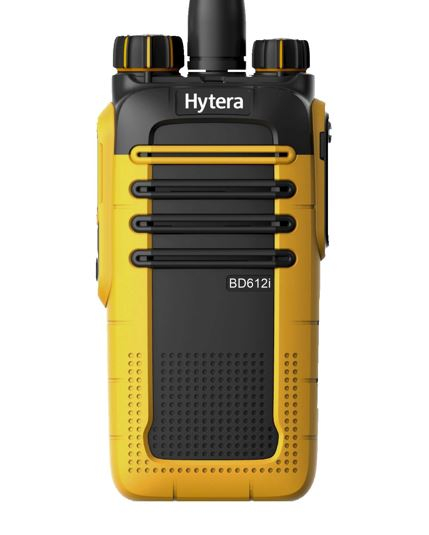
The Hytera BD612i is a workhorse field radio purpose-built for environments like Tennessee Grasslands. Its IP66 weatherproof rating means it shrugs off morning dew, rain delays, cart wash splash back, and the Tennessee summer heat without missing a beat.
DMR digital technology delivers significantly cleaner audio than legacy analog systems — critical when a marshal needs to be clearly understood over wind, mowing equipment, or a crowded post-round gathering. The 48-channel capacity allows the club to program separate talk groups for each operational department, eliminating cross-talk and keeping communications organized:
Golf Operations
Grounds & Maintenance
Food & Beverage
Events & Banquets
Guest Services & Security
Solution Overview
Hytera Solution (Specifications) designed by www.twowayradio.com

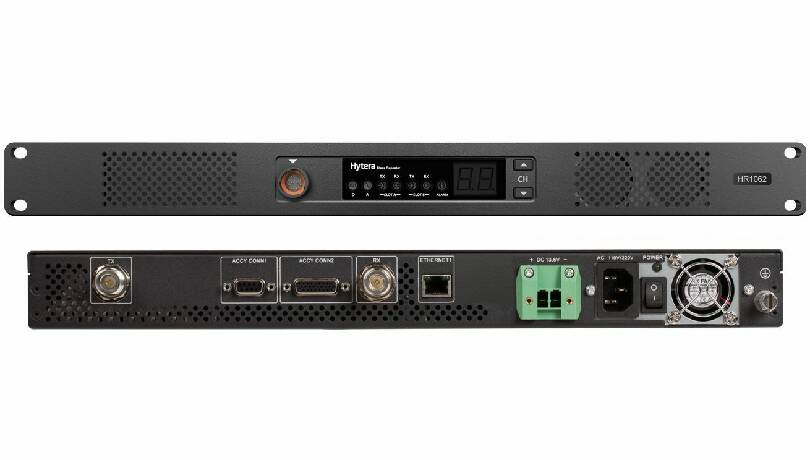
Hytera HR1062 U1 Repeater - 2C, 50W, Analog/Digital DMR, UHF(400-470MHz)
Repeater & Centrally Located Antenna
With 36 holes spread across Old Hickory Lake, a standalone radio-to-radio system simply would not provide adequate coverage — terrain, trees, and distance would swallow transmissions on the far ends of both courses. TwoWayRadio.com designed the solution around a Hytera repeater fed by a centrally located antenna, mounted at the highest structural point on the clubhouse or maintenance facility.
The repeater receives every transmission from a BD612i anywhere on the property and instantly re-broadcasts it at full power — giving a beverage cart driver on the far end of the Foxland Links course the same crisp, reliable connection to the pro shop as someone standing in the parking lot.
This single-antenna architecture also simplifies the installation, keeps long-term maintenance straightforward, and gives the club a single reliable infrastructure point to service rather than a complex web of distributed hardware.
Department-by-Department Usage
Golf Operations
Starters, marshals, and the pro shop stay coordinated across two simultaneous 18-hole rounds. Pace-of-play issues, cart deployments, tee time adjustments, and weather alerts all flow through a dedicated Golf Ops talk group. DMR digital clarity means a marshal can radio the starter about a slow foursome on hole 14 without any risk of mishearing the hole number.
Marshals reporting pace-of-play issues across both courses simultaneously
Pro shop dispatching carts and managing tee sheet changes in real time
Starter coordinating shotgun starts and group arrivals on both courses
Grounds & Maintenance
The maintenance crew operates on their own dedicated channel, coordinating morning mowing schedules around early tee times, flagging irrigation problems near the water features, and reporting equipment issues without tying up golf staff. The IP66 weatherproofing on the BD612i means radios survive the mud, moisture, and rough daily handling that comes with grounds work.
Morning mowing coordination timed around earliest tee times
Irrigation and drainage alerts on holes adjacent to Old Hickory Lake
Equipment breakdown and emergency response communication
Food & Beverage
Beverage cart drivers use radios to report their locations across both courses and coordinate restocking runs, while clubhouse dining and bar staff use their channel to manage the flow of large groups coming off the course. Clear digital audio is especially valuable in the noisy environment around the bar and outdoor terrace.
Beverage cart route coordination across 36 holes
Kitchen-to-floor communication for large incoming groups
Restocking coordination between cart staging and the clubhouse
Events & Banquets
With weddings, corporate outings, and private events regularly filling the clubhouse, event center, and outdoor lakeside spaces, the Events channel keeps all parties synchronized without anyone leaving their post. The Hytera system's talk group structure means event staff communicate on a clean channel completely separate from golf operations.
Ceremony-to-reception timing signals between coordinator and kitchen
AV, setup, and catering crew coordination across multiple venues
Valet and guest arrival management during large events
Guest Cottages & Security
Housekeeping and security personnel covering the historic lakeside cottages and full property perimeter rely on the repeater-backed system to maintain contact at all hours. The extended coverage provided by the centrally located antenna ensures response times stay fast regardless of where on the property an issue arises.
Cottage housekeeping turnover and guest services coordination
Security patrol communication across the full property perimeter
After-hours response communication for cottage guests and events
www.TwoWayRadio.com Partnership Advantage
Rather than guessing at equipment needs, Tennessee Grasslands worked directly with TwoWayRadio.com to properly scope the system from the ground up — accounting for the property's acreage, topography, lake exposure, department count, and concurrent user load across a busy golf season.
TWR - TwoWayRadio.com's approach is to understand the operational challenges a customer faces and engineer a solution around them. For Tennessee Grasslands, that meant recommending the Hytera repeater infrastructure and centrally located antenna rather than simply supplying a bag of radios and leaving the coverage question unanswered.
The result is a professional-grade Hytera DMR system that delivers reliable digital communications across every corner of the property today, and scales easily as the club adds staff, hosts larger events, or continues to grow its membership and amenity offerings.
The Design team at TWR provides a end to end solutions advantage without the hefty expense of local dealers which can overprice and over design solutions. TWR brings expertise and value to each and every customer.
Frequently Asked Questions:
Two-Way Radio Systems for Golf Courses
A complete buyer's guide for golf course operators, GMs, and directors of operations - For Support Contact www.twowayradio.com - support@twowayradio.com or 651.379.9260
Coverage & Range
Q: How much range/coverage do I need for my property size?
A standard 18-hole golf course covers 100–200+ acres. For flat, open terrain, a quality UHF or VHF handheld radio can cover 1–2 miles. Wooded, hilly, or architecturally complex courses may see range drop significantly — sometimes to under half a mile.
Rule of thumb: test radios on your specific property before committing to a system. Many vendors offer demo units for site walks.
Q: Will radios work in areas with hills, trees, or buildings blocking line of sight?
Two-way radios use line-of-sight radio frequency (RF) transmission. Obstacles like hills, thick tree lines, cart barns, and clubhouse buildings can degrade or block signal.
Solutions include: choosing UHF frequencies (which penetrate obstacles better than VHF), deploying a repeater on high ground, or using a digital system with improved signal processing.
Q: Do I need a repeater to cover my entire course?
For most 18-hole courses, yes — especially if your property has any terrain variation. A repeater receives a weak signal and retransmits it at higher power, dramatically extending range.
A single well-placed repeater (typically on a rooftop or elevated structure) can provide complete coverage for most courses. Larger or multi-course operations may require two.
Licensing & Compliance
Q: Do I need an FCC license to operate two-way radios on my course?
It depends on the radio type. License-free options (FRS — Family Radio Service) require no license but have limited power (0.5W) and shorter range. GMRS radios offer more power and require an FCC license, but it's a simple individual/family license with no exam.
For professional UHF/VHF business-band radios, a Part 90 FCC license is required. This is the standard for most commercial golf course deployments and provides dedicated, interference-protected frequencies.
Q: What's the difference between licensed (UHF/VHF) and license-free (GMRS/FRS) radios?
Licensed UHF/VHF radios: Higher power (up to 5W), dedicated frequencies, better range and reliability. Required for professional use. Annual licensing cost is modest (~$75–$150 per 10-year license).
License-free FRS/GMRS: Lower cost upfront, no licensing paperwork for FRS. However, shared public frequencies mean interference risk from other users nearby, and FRS power limits restrict range.
For a professional golf operation, licensed UHF radios are almost always the right choice.
Q: How long does FCC licensing take and what does it cost?
FCC Part 90 business licenses typically take 1–3 business days to process online via the FCC's Universal Licensing System (ULS). The application fee is approximately $75 per license term (10 years).
Many radio dealers will handle the FCC application on your behalf as part of the system sale.
Durability & Environment
Q: Are the radios waterproof or weather-resistant enough for outdoor use?
Golf courses demand weather-resistant radios as a baseline. Look for radios with at least an IP54 rating (splash-resistant) for general staff use. For maintenance crews or cart staff exposed to heavy rain and course irrigation, IP67 (submersible to 1 meter for 30 minutes) is strongly recommended.
Military-grade MIL-STD-810 certified radios offer the highest durability and are well worth the investment for outdoor environments.
Q: How well do they hold up to drops, carts, and rough handling?
Golf course radios take abuse. Drop them in cart paths, clip them to bags, leave them on carts in rain. Choose radios with reinforced chassis, rubberized overmolding, and sturdy antenna connections.
Brands known for durability in golf/hospitality environments include Motorola Solutions (MOTOTRBO series), Kenwood (NX series), and Hytera. Avoid consumer-grade radios for professional deployments.
Battery & Charging
Q: How long do batteries last on a full shift?
Most professional radios offer 8–16 hours of battery life on a standard Li-ion pack. For a typical 10–12 hour operating day, most modern radios will last a full shift on a single charge, provided they have adequate capacity (1800–2500 mAh recommended).
Battery life varies with transmission frequency. A staff member who transmits frequently (e.g., a starter calling every few minutes) will drain a battery faster than someone who mostly listens.
Q: Can I use multi-unit charging docks for easy end-of-day charging?
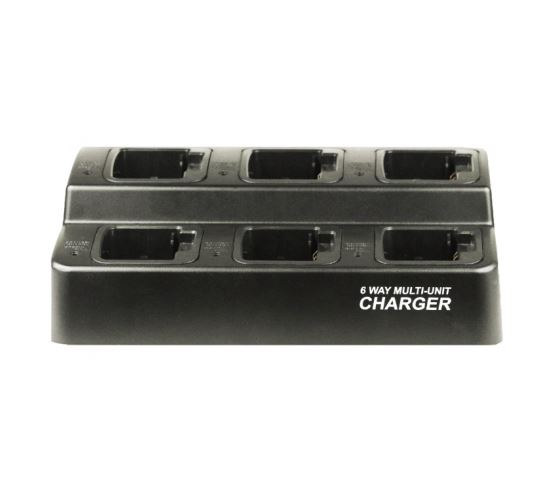
Yes, and this is highly recommended for golf operations. Multi-unit charging docks (typically 6-unit racks) allow all radios to be charged overnight in a central location — pro shop back office, maintenance shop, or F&B area.
Some docks also condition batteries to extend overall battery lifespan. Consider purchasing a dock with one slot per radio plus 1–2 spares for your peak-season inventory.
Q: Are batteries hot-swappable so radios stay in use all day?
Most professional radios support hot-swap batteries, meaning a depleted battery can be replaced while the radio continues to operate. This is a valuable feature for courses that run continuous operations (events, tournaments) where charging downtime is not acceptable.
Carry a small stock of spare batteries and charge them in rotation during peak event days.
Channels & Privacy
Q: How many channels do I need to separate departments?
A typical 18-hole operation benefits from 4–6 dedicated channels: (1) Pro Shop / Guest Services, (2) Starters & Rangers, (3) Cart Staff, (4) Maintenance/Grounds, (5) F&B/Turn Shack, and (6) Management/All-Call.
Separating departments reduces radio traffic noise and prevents cross-department miscommunication. Managers can monitor multiple channels by scanning .
Scanning
The feature that allows a radio to automatically scan through multiple channels to find an active transmission.
Q: Can I prevent guests or outside users from hearing staff communications?
Yes. Licensed UHF/VHF radios on dedicated frequencies are far less accessible to the public than shared GMRS/FRS channels. Adding CTCSS (Continuous Tone-Coded Squelch System) tones or DCS (Digital Coded Squelch) codes to your channels means radios only open the speaker when they receive a matching tone — blocking out unintended transmissions.
For highest security, digital radio systems (DMR, NXDN, P25) encrypt transmissions, making them entirely unintelligible to scanners or outside listeners.
Ease of Use
Q: How easy are the radios to operate for non-technical staff?
Most professional radios designed for hospitality and outdoor recreation are intentionally simple: a channel knob, volume knob, and push-to-talk button. Staff training typically takes under 10 minutes.
Avoid feature-heavy radios with complex menus if your primary users are seasonal workers or staff who use radios infrequently. Simplicity reduces errors and improves adoption.
Q: Is there a push-to-talk (PTT) option for hands-free use?
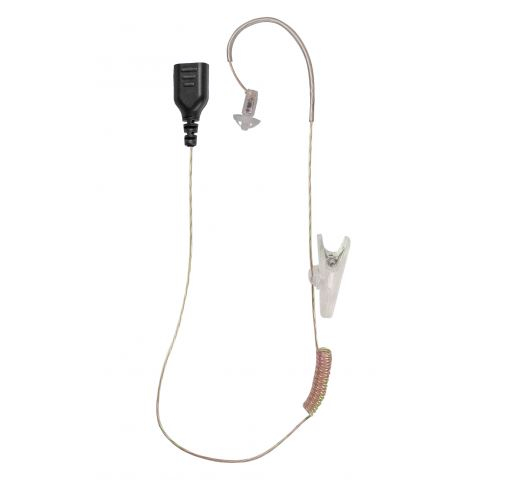
Yes. Remote speaker microphones (RSMs) clip to a collar or epaulette, allowing staff to transmit without removing the radio from a holster. Wireless Bluetooth earpieces and PTT accessories are also available for even greater discretion and convenience.
For cart staff and starters, a shoulder-clip mic setup is highly recommended for safety and ease of use while driving.
System Scale & Expansion
Q: How many radios do I need for a typical 18-hole operation?
A reasonable starting inventory for a single 18-hole course: 2–3 pro shop, 2 starters, 2–3 rangers, 2–4 cart staff, 3–5 maintenance/grounds, 1–2 F&B, 1–2 management. Total: approximately 15–20 radios, plus 2–3 spares.
Tournament days or high-volume weekends may require 25–30+ radios. Plan your inventory around your busiest days.
Q: Can I add more radios later as the operation grows?
Yes. Radios operating on licensed frequencies can be added to your fleet at any time, provided you stay within the power and quantity parameters of your FCC license. Most commercial radio systems are fully scalable.
If you anticipate growth (adding a second course, expanding F&B, etc.), mention this to your vendor upfront so they recommend a system with room to grow.
Q: Can different radio brands communicate with each other?
Analog radios from different manufacturers can communicate if they operate on the same frequency and use the same CTCSS/DCS codes — this is one advantage of the analog standard.
Digital radios (DMR, NXDN, P25) are often brand-specific in their advanced features. Basic cross-brand communication is possible in digital mode, but advanced features (encryption, GPS, emergency alerts) typically only function within the same brand ecosystem.
Management & Maintenance
Q: Can I remotely manage or monitor the radio fleet?
Digital radio systems (DMR/MOTOTRBO, Kenwood NX-D, Hytera) support fleet management software that allows administrators to remotely program radios, disable lost units, monitor battery status, and view usage logs — all from a desktop application.
This is particularly valuable for courses with large fleets or high staff turnover.
Q: Should I buy or rent/lease the radios?
Purchasing is typically more cost-effective for permanent operations planning to use the system for 3+ years. Renting is practical for one-time events (tournaments, outings) or to supplement your fleet seasonally.
Some vendors offer lease-to-own programs or maintenance service agreements that bundle hardware, repairs, and battery replacements into a predictable monthly cost — worth considering for operations that want to avoid large capital expenditures.
Integration & Advanced Features
Q: Can radios integrate with our existing phone or dispatch system?
Yes. Radio-to-phone gateways allow staff on two-way radios to communicate directly with landline or cell phone users. This is useful for connecting the pro shop to on-course staff without requiring everyone to carry a smartphone.
IP dispatch consoles allow a manager at a desktop to monitor and communicate across all radio channels simultaneously — popular in resort and larger multi-venue operations.
Q: Are there GPS-enabled options to track carts or staff locations?
GPS-enabled radios (available in Motorola, Kenwood, and Hytera product lines) transmit location data that can be displayed on a map in real time. This is useful for: locating rangers on course, tracking cart return status, and coordinating maintenance crews across a large property.
Note: GPS features typically require a digital radio system and a software subscription or server to display the location data.
Cost and ROI
Q: What is the typical upfront cost for outfitting a full golf course operation?
A professionally installed system for a single 18-hole course typically runs $5,000–$20,000+, depending on: number of radios, radio tier (entry-level analog vs. digital), whether a repeater is required, accessories (holsters, earpieces, desk chargers), and installation/programming labor.
Entry-level analog systems for a small course can start around $3,000–$5,000. A full digital system with repeater, fleet management software, and premium radios for a larger operation can exceed $25,000.
Q: Are there ongoing costs beyond the initial purchase?
Yes, budget for: FCC license renewal (every 10 years, ~$75), battery replacement (every 2–3 years per radio), optional software subscriptions for fleet management or GPS, and periodic radio repair or replacement from normal wear.
A realistic annual maintenance budget is 5–10% of the initial hardware cost.
Q: What is the ROI in terms of operations?
The operational benefits are significant: faster response to ranger calls, quicker cart retrieval, more efficient coordination between maintenance and operations, and improved guest experience through better-staffed course flow.
Most courses recoup the cost of a radio system within a single season through improved pace of play, reduced cart loss, and fewer service failures. Quantifying this varies by course volume, but a well-coordinated radio network is considered essential infrastructure for any serious golf operation.